
The 6 Best Lenders for Personal Loans for Low Income Individuals in 2026


The 6 Best Lenders for Personal Loans for Low Income Individuals in 2026
Last updated: 2026-11-25
When your monthly budget feels like a tightrope walk, finding a lifeline is incredibly stressful. For many, a personal loan isn’t a luxury. It is a necessary tool to bridge the gap between a sudden car repair and your next paycheck. Unexpected expenses—an ailing appliance, a medical bill, or a transmission failure—don’t care about your credit score or your savings. They arrive with urgency, demanding action when your liquidity is lowest.
Traditional banks often feel like fortresses designed to keep people out, especially when income is lower than average. Selecting a lender requires looking past shiny advertisements. You need a partner that understands financial volatility. The right choice should offer transparency in fees, speed in funding, and a clear path toward repayment that won’t lead to a debt spiral.
For a low-income borrower, a single high-interest loan can become a predatory cycle if approached without extreme caution. This guide simplifies that hunt for those navigating tight financial waters. We provide the granular detail needed to make an informed decision rather than an impulsive one.
- Farm Credit
- Academy Bank
- JetzLoan
- CareCredit
- Addition Financial
- Personify
How These Lenders Were Evaluated for Accessibility
Our evaluation focused on how accessible these lenders are for people with non-traditional income streams or imperfect credit histories. It is not just about who says “yes,” but how they say it. We looked at funding speed and whether the application process would penalize a seeker’s credit score before they even knew if they were approved.
This “soft inquiry” period is vital. It allows a borrower to shop around without seeing their credit score drop by several points. This is crucial for those already working to rebuild their financial standing. Speed was also a massive factor because low-income households often face emergencies that require immediate cash. A loan that takes two weeks to arrive is useless if the utility bill is due tomorrow.
We prioritized lenders that offer quick decisions and transparent terms. We wanted to ensure the cost of borrowing is clear from the very first click. We also examined the “fine print” elements. Does the lender charge an origination fee that is deducted from the principal? How quickly can you actually see the cash in your bank account once the contract is signed? A lender might promise “next-day funding,” but if their underwriting takes three days, that promise is hollow.
Comparison of Top Rated Lenders
| Lender Name | Loan Amount Range | Funding Speed | Credit Impact of Inquiry | Best For |
|---|---|---|---|---|
| Farm Credit | See site | See site | See site | Rural Communities |
| Academy Bank | See site | See site | See site | Traditional Banking |
| JetzLoan | $500 – $35,000 | As little as 24 hours | No hard credit pull | Fast Cash |
| CareCredit | See site | Instant decisions | No impact to score | Health & Wellness |
| Addition Financial | See site | See site | See site | Credit Union Members |
| Personify | See site | As soon as tomorrow | No impact to score | Simplified Online Use |
Top Lenders for Low Income Borrowers
1. Farm Credit
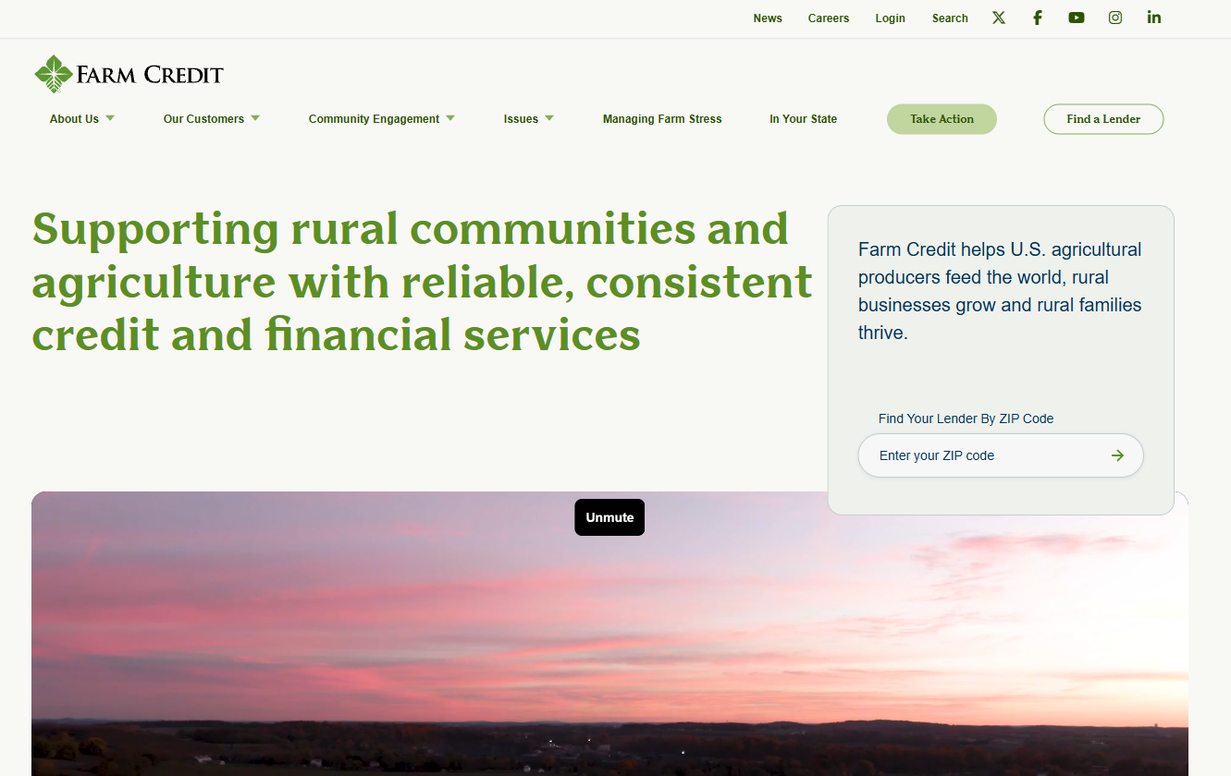
This organization operates as a nationwide network of customer-owned cooperatives. They focus heavily on supporting the backbone of the country: farmers, ranchers, and rural businesses. If your lifestyle is tied to the land or rural infrastructure, this cooperative model offers a different flavor of stability than a standard big-box bank. Because they are member-owned, their mission is often tied more closely to the prosperity of the community they serve rather than just maximizing shareholder profit.
They serve over 615,000 customers across all 50 states and Puerto Rico. This scale allows them to understand the unique seasonal income fluctuations that many agricultural workers face. For example, a farmer might have massive expenses in the spring for seed and equipment but won’t see a significant cash influx until the harvest in the fall.
Standard lenders often struggle with this “lumpy” income. Farm Credit’s deep understanding of the agricultural cycle makes them a specialized choice for those living outside major metropolitan hubs who need reliable, consistent credit services.
Pros:- Customer-owned cooperative structure
- Strong focus on rural communities and agribusiness
- Nationwide reach including Puerto Rico
- Highly specialized, may not suit urban dwellers
2. Academy Bank
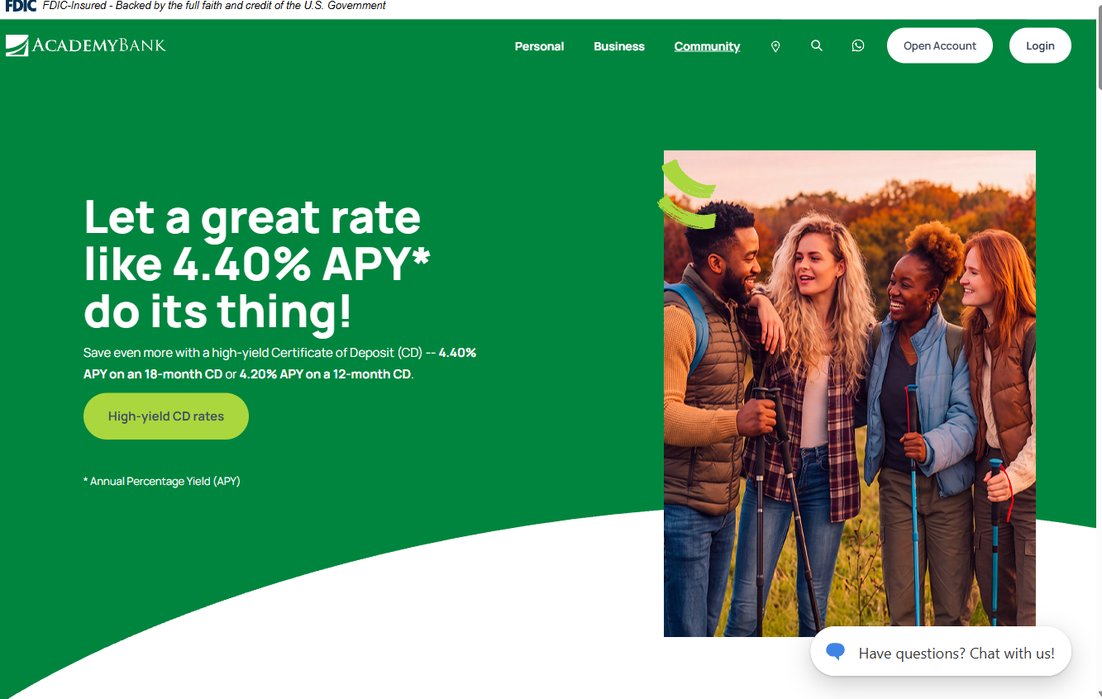
Academy Bank provides a more traditional banking experience with a focus on high-yield options and personal service. They emphasize being a reliable partner for both personal and business needs. For those who value a sense of community and long-term banking relationships, this institution offers a structured approach to growth.
Unlike the rapid-fire, automated nature of many fintech lenders, Academy Bank offers the stability of a traditional institution with the modern conveniences expected in today’s economy. They offer various products, including high-yield Certificates of Deposit (CDs) that can help a saver build a small cushion over time.
For a low-income earner, building even a $500 emergency fund can prevent the need for high-interest loans in the future. While the focus is on various banking services, their presence in the personal finance space is built on a foundation of client service and established expertise. This makes them a strong choice for those who want to build a multi-faceted relationship with their bank, moving from simple checking accounts to more significant financial products as their income stabilizes.
Pros:- FDIC-insured security
- High-yield CD options available
- Personalized client service focus
- Standard banking requirements may apply
3. JetzLoan
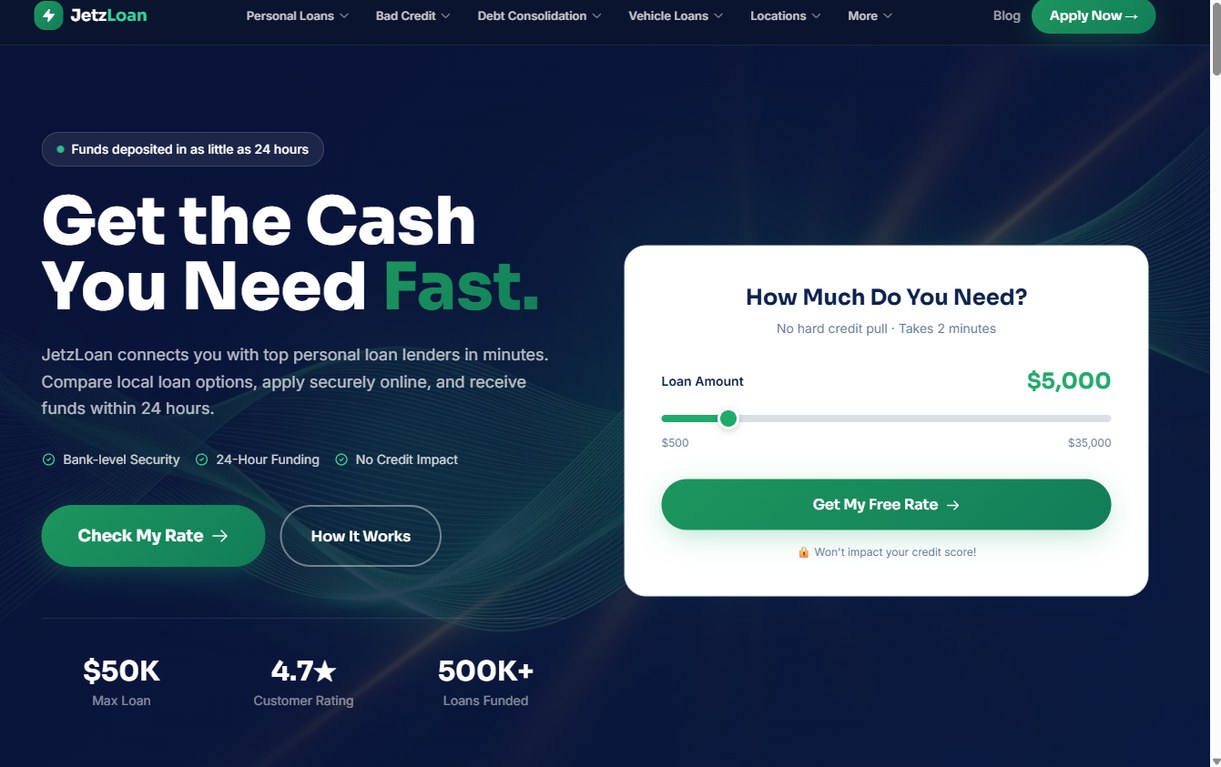
When time is of the essence, JetzLoan steps into the spotlight. They specialize in connecting borrowers with top lenders in a matter of minutes. This is particularly useful for those who need to compare local options without the headache of visiting multiple offices or waiting weeks for a response. In an era where digital speed is everything, JetzLoan narrows down the overwhelming sea of lenders to the ones most likely to approve your specific profile.
The platform is designed for speed, with the potential to have funds deposited in as little as 24 hours. They offer a range of amounts from $500 up to $35,000. This makes them a versatile option for both small emergencies, like a $600 tire replacement, and larger needs, like a $10,000 home repair.
It is a streamlined solution for people who need to bridge a gap quickly without a heavy-handed credit check that could damage their ability to borrow in the future.
Pros:- No hard credit pull to check rates
- Fast funding, potentially within 24 hours
- High customer rating of 4.7 stars
- Maximum loan cap is $35,000
4. CareCredit
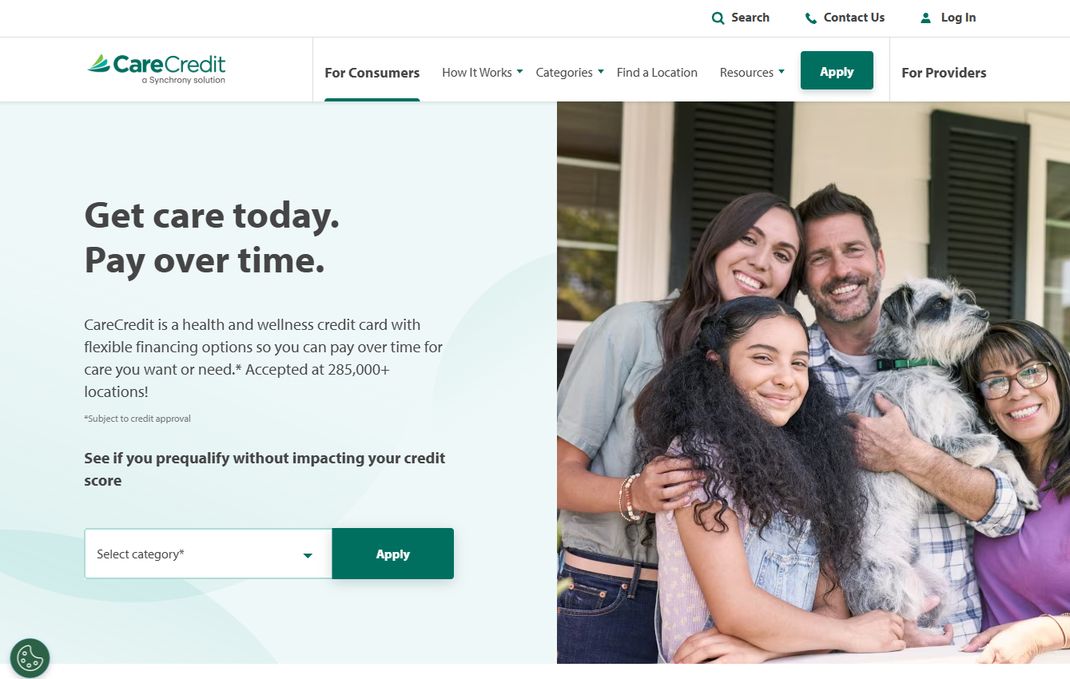
Healthcare costs can be a massive, unexpected burden on a low-income budget. CareCredit is a specialized credit card designed specifically for health and wellness expenses. It is a targeted tool for those who need to manage medical, dental, or veterinary costs over time. Instead of taking out a general personal loan that might have a higher interest rate, CareCredit allows you to direct your credit toward specific, essential life needs.
The application process is designed to be quick, often providing instant credit decisions. This can be a lifesaver when a medical procedure cannot wait or when an emergency vet visit occurs on a weekend. They offer promotional financing options for larger purchases, such as 6, 12, or 18-month interest-free periods.
However, you must understand the catch. If you fail to pay the full amount within the promotional period, you may be charged interest on the entire original balance from the date of purchase. This makes them an excellent tool if you have a strict repayment plan, but a dangerous one if you are unsure of your ability to pay quickly.
Pros:- Accepted at over 285,000 locations
- Instant credit decisions available
- No impact to credit score when prequalifying
- Primarily limited to health and wellness expenses
5. Addition Financial
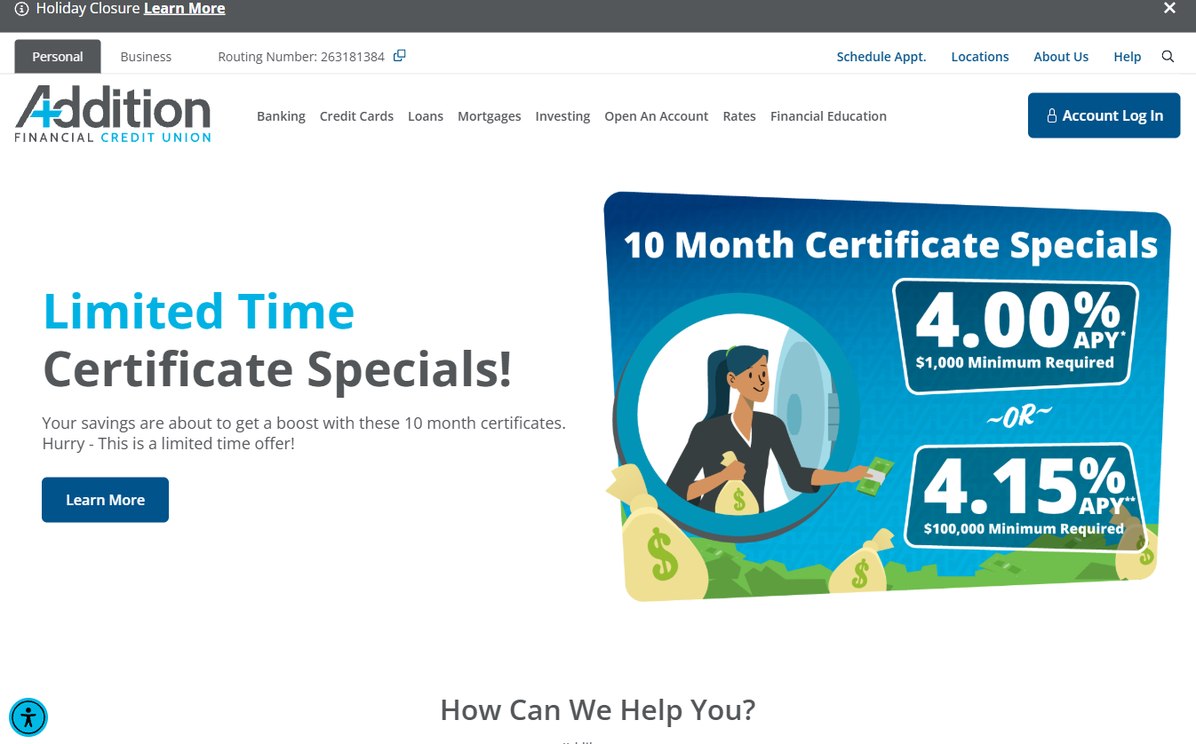
As a credit union, Addition Financial offers a member-centric alternative to traditional banks. Credit unions are often more sympathetic to the individual needs of their members because they are non-profit cooperatives. They provide a wide array of services including checking, savings, and various loan products to help people grow their financial future.
Because they don’t have to answer to Wall Street shareholders, they can often offer slightly better interest rates and more flexible terms for those with unconventional financial histories. They offer a variety of ways to engage, from basic checking accounts to more complex investment and mortgage products.
For someone looking for a long-term financial home rather than a quick transaction, the credit union model provides a community-focused atmosphere for managing money. Becoming a member often requires meeting certain criteria, such as living in a specific area or working in a certain industry, but the long-term benefits of lower fees and personalized service often outweigh the initial effort of joining.
Pros:- Credit union membership benefits
- Diverse range of financial products
- Focus on financial education and growth
- Membership requirements may apply
6. Personify
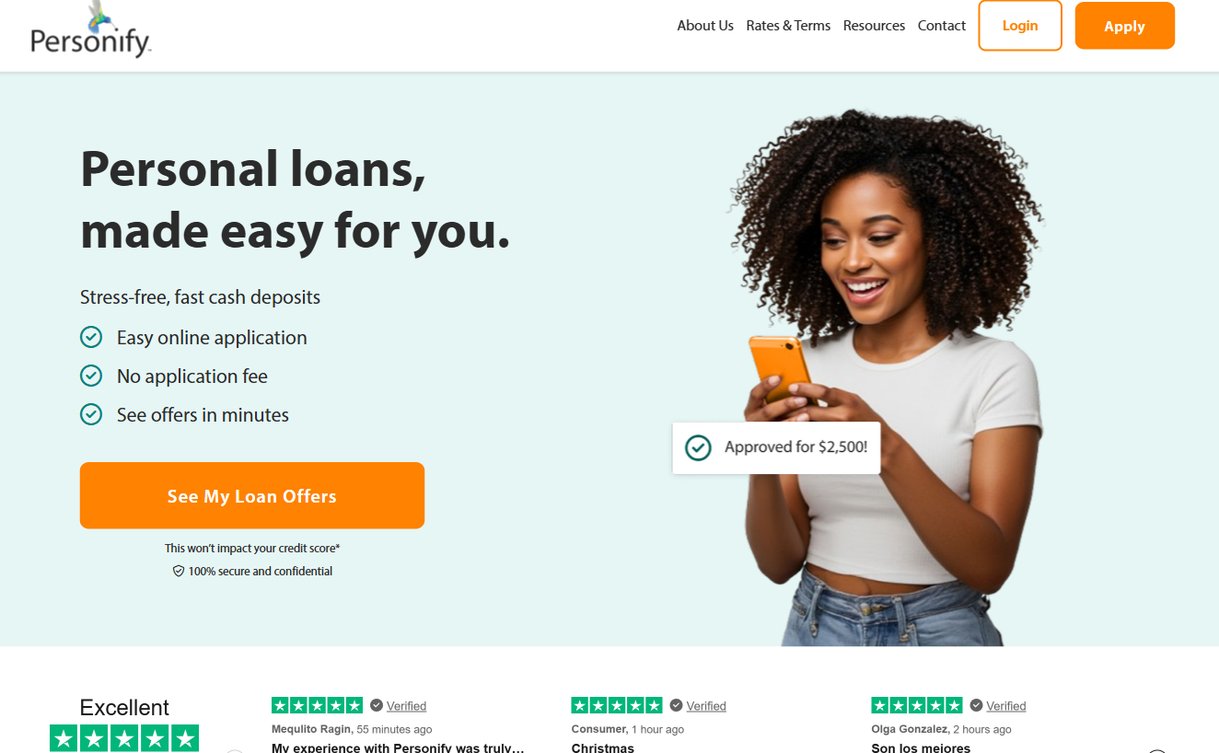
Personify aims to strip away the complexity of the traditional loan process. Their platform focuses on a “your loan, your way” philosophy, allowing for a customized experience. It is built for the digital-first borrower who wants to see offers in minutes without a long, drawn-out ordeal. This is ideal for the modern worker who may be working multiple jobs or non-traditional hours and cannot spend a Tuesday afternoon sitting in a bank lobby.
The process is designed to be stress-free, with a focus on speed and ease of use. They emphasize that their initial inquiry won’t impact your credit score. This is a massive relief for those trying to gauge their options without risk. Money can be deposited as soon as the next day.
This high-velocity approach to lending is perfect for the “gig economy” worker who needs to react to a financial gap immediately to keep their household running smoothly.
Pros:- No impact to credit score during inquiry
- Fast deposits, potentially as soon as tomorrow
- Simplified, user-friendly online application
- Digital-focused, may lack personal interaction
Understanding the True Cost of Borrowing
When you are in a financial pinch, it is easy to focus solely on the monthly payment. If you can afford $50 a month, you might be tempted by a loan that offers that specific amount. However, you must look at the “Total Cost of Loan” figure. A loan with a low monthly payment might be stretched over 60 months, whereas another might be 24 months.
That extra time spent paying back the loan can result in paying thousands of dollars more in interest, even if the monthly payment feels affordable. Consider these specific costs that often hide in the fine print:
- Origination Fees: This is a fee charged by the lender for processing your application. It is often taken directly out of the loan amount. If you borrow $1,000 but there is a 5% origination fee, you will only receive $950 in your bank account, but you will still owe interest on the full $1,000.
- Prepayment Penalties: This sounds counterintuitive, but some lenders charge you for paying your loan off early. They do this because they lose out on the interest they expected to collect. Always ensure your loan has no prepayment penalty so you can save money by paying it off faster when your situation improves.
- Late Fees and NSF Fees: For a low-income borrower, one missed payment can trigger a cascade of fees. A single late fee could be $35, and if that causes your bank to charge a non-sufficient funds (NSF) fee for a failed utility payment, you could lose an additional $35. Suddenly, that $1,000 loan just became much more expensive.
Preparation Steps for a Successful Application
Applying for a loan when your finances are tight can feel like an interrogation. Being prepared can increase your chances of approval and help you secure a lower interest rate. Follow these steps to strengthen your application:
- Gather Documentation Early: Have digital copies of your last two pay stubs, your most recent W-2 or 1099 forms, and a recent utility bill (to prove residency) ready to upload. Delays in paperwork are a primary reason for “pending” applications.
- Verify Your Income Sources: If you work in the gig economy (Uber, DoorDash, etc.), lenders may require more extensive proof of income, such as several months of bank statements showing regular deposits. Don’t wait for the lender to ask; have these ready.
- Check Your Own Credit Report: Before you apply, use a free service to check your report. If there is an error—such as a debt you already paid that is still showing as “unpaid”—dispute it immediately. Even a small error can be the difference between a low-interest loan and a rejection.
- Calculate Your Debt-to-Income Ratio (DTI): Lenders look at how much of your monthly income already goes toward debt. If you spend 40% of your income on rent and existing car payments, you have less room for a new loan. Knowing this number helps you realize if you are asking for more than you can realistically afford.
Mistakes often happen when borrowers act out of desperation. It is easy to grab the first offer that comes along, but taking ten minutes to compare a credit union against an online lender can save hundreds of dollars. Always ensure you understand the repayment schedule to avoid the trap of late fees, which can quickly overwhelm a limited budget.
Finally, remember that a loan is a tool, not a permanent solution to income gaps. Using a loan to fix a recurring problem without addressing the underlying budget issue is like trying to bail out a sinking boat with a teaspoon. If you find yourself using a personal loan to pay off another personal loan, you are entering a debt spiral. Use these funds strategically to improve your financial standing—such as repairing a car so you can get to work more reliably—rather than just masking a temporary deficit with more expensive debt.